

You almost certainly use it every day to bring out the flavour of your dishes, but have you ever wondered what salt actually is?
Throughout history, this ingredient has been so valuable that it was even used as a prized currency, giving rise to the concept of salary that we use today, not to mention its unquestionable role in preserving and preparing food.
However, there is a recurring question among consumers: is salt a mineral?
The short answer is yes. In fact, salt is considered the only edible rock. In this article, we explain in detail where it comes from, what elements it naturally contains, what mineral-rich salt is used for, and why it is important to choose one that preserves its purity intact.
Why is salt a mineral?
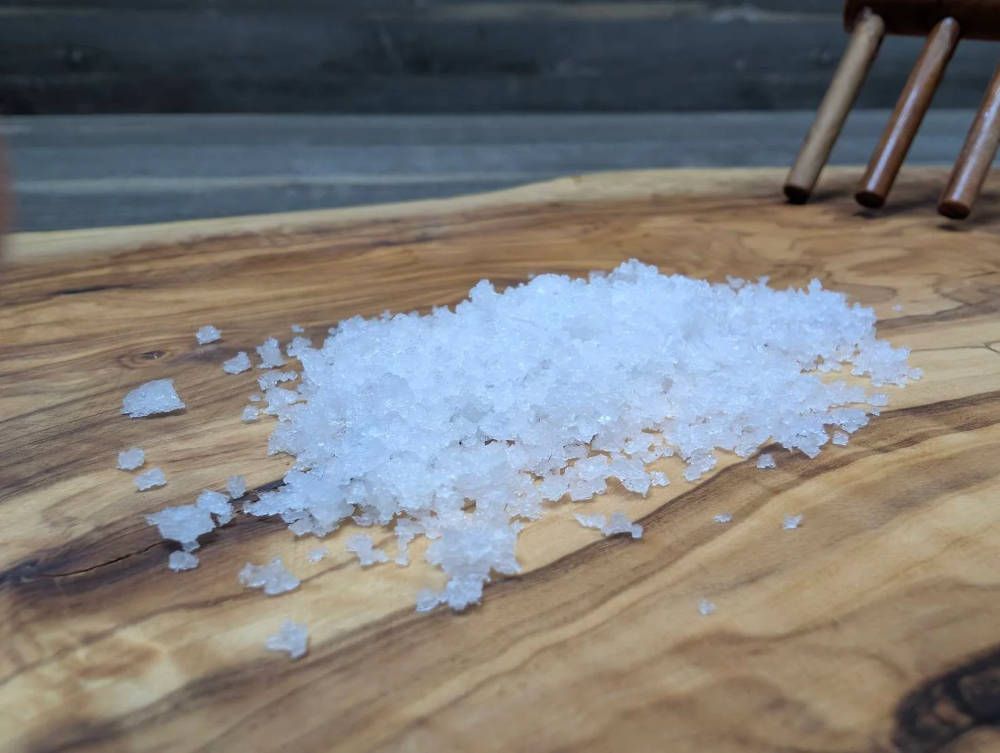
Salt is a mineral because its crystals form naturally from an inorganic compound, sodium chloride (NaCl). Although we usually see it as an everyday cooking ingredient, in reality each grain of salt has a perfectly ordered crystalline structure, characteristic of the mineral world.
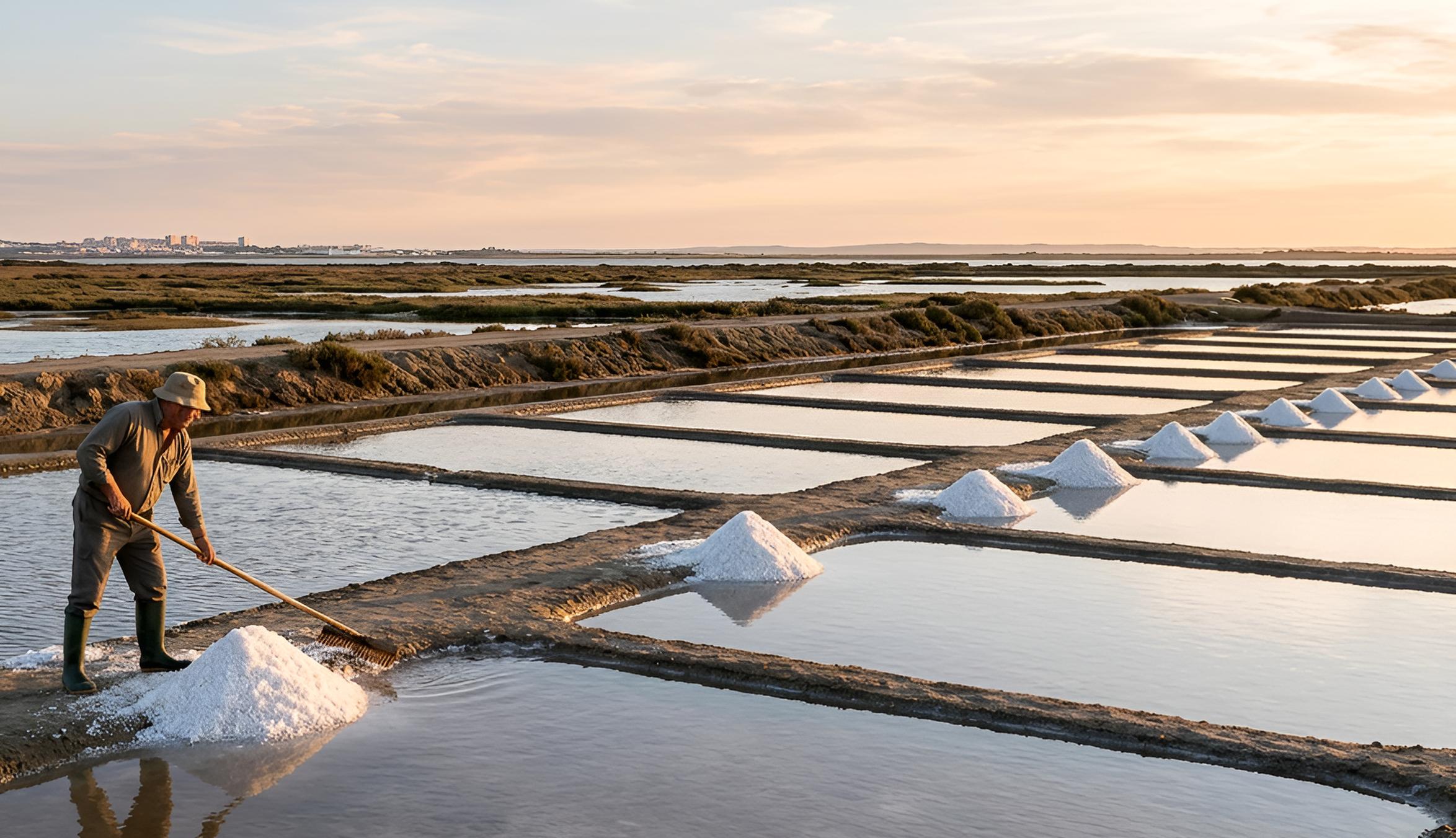
In the case of virgin sea salt, its origin is directly linked to the sea and to traditional salt pans. When seawater slowly evaporates thanks to the sun and wind, the salt concentration increases until the minerals begin to crystallise naturally. It is at that moment that salt crystals are born.
Unlike rock salt extracted from mines, virgin sea salt is formed through a natural evaporation process. However, both share the same mineral base: crystallised sodium chloride.
In addition, virgin sea salt retains small amounts of other minerals present in seawater, such as magnesium, calcium, or potassium, which are part of its natural richness and flavour nuances.
That is why, when we use virgin sea salt, we are not only adding flavour to food; we are also using a mineral product born directly from the interaction between the sea, the sun, and the wind.
For all these reasons, it can be stated that salt is a mineral.
Origin of salt
The origin of salt can be classified mainly into three major natural sources:
- Mine salt or rock salt: comes from ancient seas and saltwater lakes that evaporated millions of years ago and were buried beneath layers of sediment. Over time, the salt crystallised to form underground deposits of halite. This salt is extracted through mining and, depending on its commercial use, may be crushed, washed, or industrially refined.
- Spring salt: originates from underground waters that flow through natural salt deposits and rise to the surface rich in minerals. Traditionally, these salt waters have been harnessed by evaporating them naturally or through heating to obtain crystallised salt.
- Sea salt: obtained through the evaporation of seawater or saltwater lakes. In salt pans, water circulates slowly through shallow channels where the sun and wind allow progressive evaporation. As the salt concentration rises, the minerals begin to crystallise naturally until they form salt. Bear in mind that the sea contains 35 grams of salt per litre, and for salt to crystallise so we can harvest it, it must reach approximately 270 grams of salt per litre.
In the case of virgin sea salt, the process keeps the natural rhythm of crystallisation intact. As a result, approximately 95% is sodium chloride and 5% consists of minerals and trace elements originally present in seawater.
At Dama Blanca, our virgin sea salt comes from an environment of exceptional biodiversity: the Bahía de Cádiz Natural Park.
There we harvest the salt in an artisanal and sustainable way, using only the energy of the Andalusian sun and wind for its natural crystallisation and drying. This traditional method makes it possible to obtain a pure salt, free from aggressive industrial treatments and deeply connected to its ethnographic marine origin—further proof that salt is a highly valued mineral.
What minerals does salt naturally contain?
One of the fundamental differences between refined industrial salt and artisanal virgin sea salt lies in its nutritional richness.
Common table salt undergoes industrial washing and high-temperature drying processes that remove virtually all of its accompanying trace elements, leaving only pure sodium chloride to which chemical additives, anti-caking agents, and even synthetic iodine are later added.
By contrast, Dama Blanca’s unrefined virgin sea salt keeps its original profile of essential ocean minerals intact:
- Sodium and chloride: help regulate blood pressure.
- Magnesium: this essential mineral contributes to bone health, including teeth, in addition to being vital for the proper functioning of the nervous system and muscle relaxation.
- Calcium: an essential trace element directly involved in bone formation.
- Potassium: together with sodium, it enables the cardiovascular system to function properly.
- Natural iodine: unlike artificially iodised salts, virgin sea salt contains traces of original biological iodine.
What is mineral-rich salt used for and why is it important to consume it?
Choosing a salt with natural minerals goes far beyond a simple gourmet trend; it brings numerous benefits both to the culinary experience and to the overall well-being of the body:
- Extraordinary flavour: natural trace elements such as magnesium and potassium soften the intensity of salt on the palate, achieving a complex and balanced flavour profile. As we like to remind people, our salt brings flavour to dishes—it does not take it away.
- Healthy properties: the minerals naturally present in sea salt work together. Thus, elements such as potassium help offset and balance the action of sodium in the body, making it easier for the body to assimilate the mineral optimally.
- Complete absence of harmful additives: by retaining its natural moisture and crystals, artisanal sea salt requires no artificial chemical compounds or anti-caking agents to prevent clumping, guaranteeing a 100% natural product.
Now that it is clear that salt is a mineral and that its consumption is essential for the proper functioning of cells, choosing the right type of salt takes on a whole new dimension.
Opting for artisanal and organic salts is the best way to look after your health while enjoying high-quality cuisine.
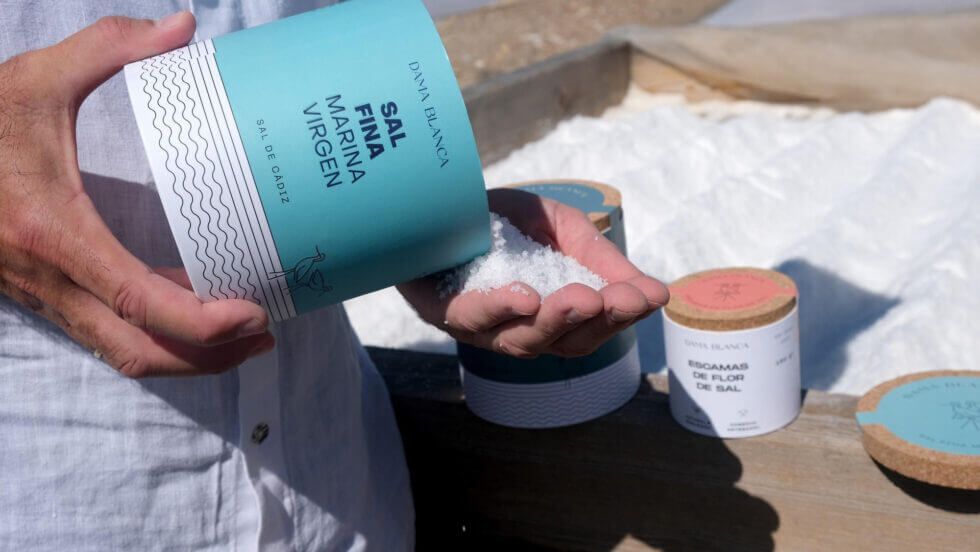
At Dama Blanca we offer you a virgin sea salt harvested by hand in the salt marshes of Cádiz, packed in sustainable recycled cardboard packaging with a plastic-free cork lid that has even won awards for its design.
Furthermore, for every package you enjoy at home, we donate 5 cents to the Salarte Association to ensure the conservation and restoration of local artisanal salt pans.
Discover our variety of textures—fine salt, coarse salt, salt flakes, and delicate fleur de sel—and transform your daily meals into authentic gastronomic experiences with an incomparable salt with minerals.
Frequently asked questions about salt as a mineral
Why is salt said to be a mineral?
It has a homogeneous, defined chemical composition (sodium chloride) and a perfectly ordered atomic pattern in the form of cubic crystals (halite), strictly fulfilling the scientific definition of a natural inorganic mineral.
Where is Dama Blanca salt extracted from?
Our salt comes from Salina La Esperanza, a protected area within the Bahía de Cádiz Natural Park (Andalusia, Spain), where it is harvested following traditional artisanal salt-making methods that fully respect the salt marsh ecosystem.
Does Dama Blanca sea salt contain any additives or added iodine?
No, our sea salt contains no artificial additives, preservatives, or chemical anti-caking agents. The iodine and other trace elements it contains are 100% naturally present, just as they are extracted from ocean water evaporated by the sun and wind.
What is the difference between common table salt and fleur de sel?
The former is usually refined at high temperatures, which removes its natural minerals and requires chemical additives.
By contrast, fleur de sel is an extremely thin and delicate layer of crystals that forms on the surface of the salt pan water only during specific hours of the afternoon and is painstakingly harvested by hand before it sinks, offering a crunchy texture and unmatched mineral richness.