

The science of salting for charcoal and grilling
Natural unrefined sea salt is an essential companion to red meat and dry-aged roasts. Its grain size and tidal moisture act as a protective thermal barrier, sealing in the juices and encouraging perfect caramelisation on the outside (the Maillard reaction).
Free from artificial additives and chemical treatments, our crystals enhance flavour, bringing out the iron-rich notes of meat without masking its texture or adding synthetic aftertastes.
Thermal barrier
The crystal’s natural moisture protects the meat fibres from direct heat and retains essential juices.
Slow dissolution
The coarse grains penetrate gradually during roasting without drying out the surface of the meat.
Umami enhancer
Atlantic trace elements enhance marbled fat and bring out the aromas of the fire.
Technical guide: choosing salt for each cut of meat
For the best results in the kitchen and at the table, each stage and cut requires a specific grain size:
Fleur de sel (finishing at the table)
Uso: Use only while the meat is hot, after resting. It melts slowly into the juices, adding an exceptional crisp texture.
Salt flakes (rib steak and entrecôte)
Uso: Crisp flakes added when carving before serving. They create bursts of flavour that contrast with dry-aged fat.
Coarse tidal-pond salt (cooking and grilling)
Uso: For searing on the grill or salt-crusted oven roasting. Withstands high temperatures and seasons evenly.
Fine unrefined salt (burgers and thin cuts)
Uso: Season before quick griddling. Even distribution and immediate searing without chemical anti-caking agents.
The master salt maker’s advice
For premium cuts such as dry-aged rib steak or ribeye, roast with coarse salt to seal the meat, then finish at the table with Dama Blanca fleur de sel after carving the meat. You will taste the difference in every bite.
Comparing salt varieties for meat
Technical summary for choosing the right product for your dishes:
| Salt type | When to apply | Recommended cut of meat | Sensory effect |
|---|---|---|---|
| Fleur de sel | Finishing at the table (plating) | Rib steak, tenderloin, Iberian pork shoulder cut | Subtle crunch and a clean burst of minerals |
| Salt flakes | On freshly carved meat | Entrecôte, picanha, ribs | Visual contrast and delicate texture |
| Coarse unrefined sea salt | During roasting / Before cooking | Whole cuts, oven roasts, barbecue | Crust formation and moisture retention |
| Fine unrefined salt | A few minutes before griddling | Gourmet burgers, skewers, tataki | Fast, even penetration |
Frequently asked questions about salt for meat
When should a steak be salted: before, during, or after cooking?
For thick cuts, apply coarse salt just before placing them on the hot grill to encourage a crust. After cooking and carving, finish with fleur de sel or flakes so the crystals melt into the hot juices.
Why is moist virgin sea salt superior for grilling?
By retaining its natural Atlantic moisture, the crystal does not draw water from the meat, but forms a protective physical barrier that seals in the juices.
Does it contain chemical anti-caking agents such as E-535?
No. Our salt is 100% organic, without additives, bleaching agents or chemical anti-caking agents, preserving its pure flavour.
Dama Blanca in the media
Features and reports on our artisanal sea salt in culinary publications and the media:






Our harvest in the official shop
Discover our organic unrefined sea salt and fleur de sel varieties for roasts and grilled meat:
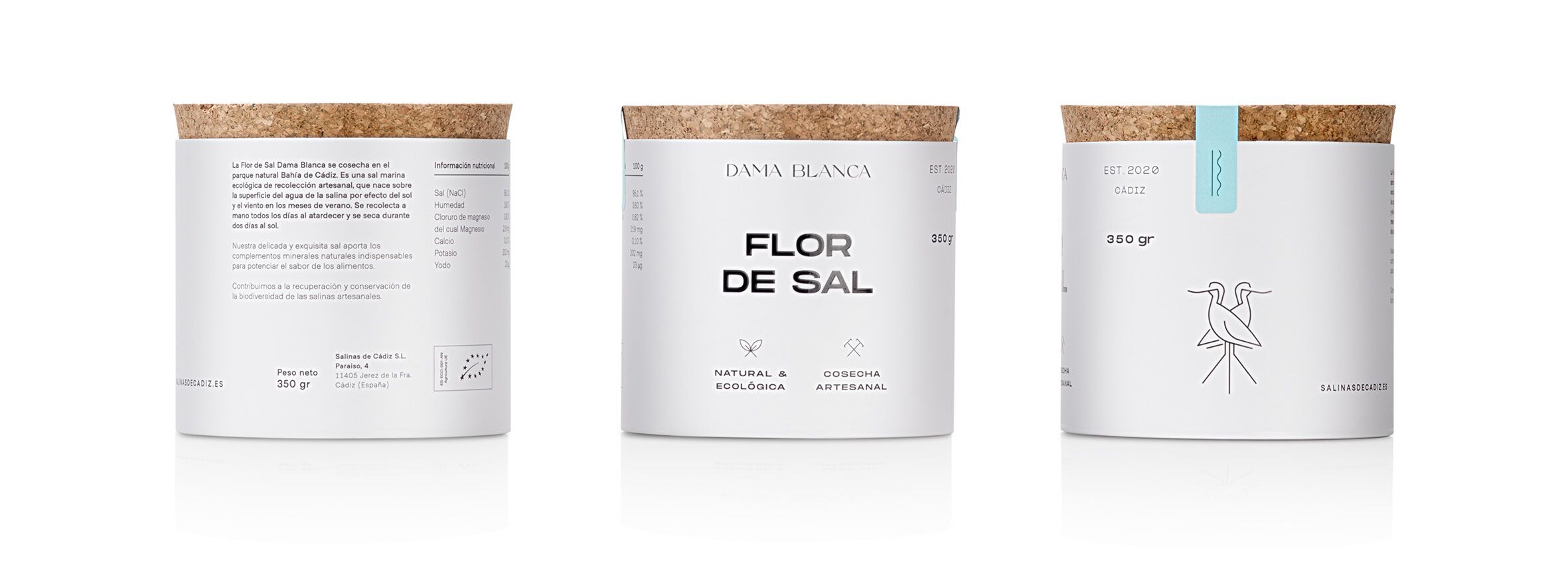
Organic fleur de sel
Hand-harvested from the surface of the tidal pond. Crisp texture and exceptional mineral richness for premium meat.
Coarse unrefined sea salt
Slow-dissolving grains for oven roasts, barbecues and salt-crusted meat or fish.